

How to Come Up With a Business Name and Grab the Domain
Naming your business is the step that stops people cold. Your domain name almost always comes straight from that business name, so if the name won't come, you're stuck before you even reach the domain. You've got the idea, maybe even the plan, and then you sit down to name it and nothing comes. Or worse, you think of a name you love, search for the domain, and it's already taken. Again. 😩
Here's the reassuring part: the name doesn't have to be perfect. It has to be clear, easy to say, easy to remember, and available to register. This guide covers both ways to get there, the fast one (let the search suggest names for you) and the thorough one (build your own), so you can go from a blank page to a name you can actually own.
What you'll learn
- A new way to get available, brandable domain names from a plain description of your business
- Where good business names come from when you'd rather brainstorm your own
- Why "everything's taken" keeps happening, and how to get around it
- What to do once you've got a name you like
Why naming feels impossible
Two things make it hard, and they're actually different problems. The first is the blank page: coming up with candidates at all. The second is the wall you hit right after: the good ones are already registered.
Most people bounce between the two. Think of a name, check it, it's gone, start over, until they give up and settle for something they don't love. You don't have to work that way.
The fast way: describe it, don't guess it
Here's the part that saves you the weekend, and it's new. Instead of dreaming up names and checking them one at a time, you can describe your business in plain language and let the search do the hunting for you.
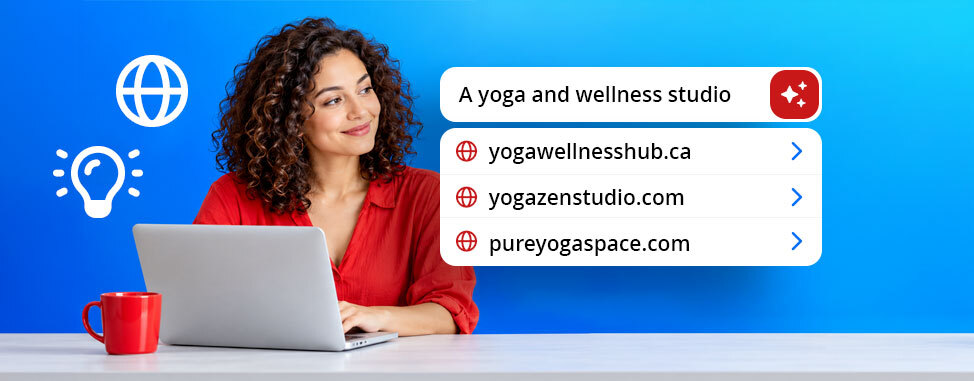
On whc.ca, type a full description of what you do into the domain search, a phrase rather than a single keyword. Something like:
"A yoga and wellness studio in Burlington"
Alongside the usual availability results, you'll get a set of brandable suggestions that are already available to register, generated by AI from what you described:
- rootedwellness.ca
- breathandbalance.com
- zenburlington.com
...and more, each shown with its price, ready to go. Pick the one you like and register it through the same checkout you'd use for any domain.
There's no new tool to learn. It's the same search bar you'd already reach for, it just understands a full sentence now, not only a keyword. And because everything it suggests is already available, you skip straight past the "is this one taken?" loop entirely.
Where good business names actually come from (if you'd rather brainstorm your own)
The search does the heavy lifting, but it's worth knowing what makes a name work, whether you're picking from its suggestions or coming up with your own. Good names rarely arrive as a flash of genius. They get built. So start with raw material, not wordplay.
Write these down fast, no filtering:
- What you do (the service or product)
- Who it's for
- The result you create for them (what's different after they work with you)
- How you want it to feel (friendly, premium, local, bold)
You'll end up with a messy list of ten or fifteen words. That list is your source. Now stretch it:
- Combine two words. Two plain words joined together often beat one clever one. (Think of how many brand names you know that are just two everyday words stuck together.)
- Invent one. A made-up, easy-to-say word carries no baggage and is far more likely to be available. The trade-off is that you build the meaning yourself, over time.
- Twist a real word. An everyday word used somewhere unexpected sticks, because the little surprise is what makes it memorable.
One rule while you brainstorm: don't box yourself in. A name built around your city or your one current product becomes a problem the day you expand to the next town or add a second offering. Name the business you're growing into, not just the one you're starting today.
Once you've got two or three you like, drop them into the domain search to see which are actually available. That's the moment your business name becomes a domain you can register.
Got a name in mind already? Put it to the test
If you came in with a name you already love, run it through a few quick checks before you commit. Is it short? Can someone spell it after hearing it once? Does the extension fit your audience?
We cover that fast in how to choose the right domain name. And if you're deciding between .ca and .com (for a Canadian business, .ca is usually the stronger first move), we break that down here. As Canada's #1 .CA registrar, we watch that pattern hold year after year.
Once you've got the name
Register it. It takes a few minutes start to finish, and you're past the step that stalls most people. From there comes the fun part: getting online.
If you want the site up quickly, our AI Website Builder works the same way the domain search does. You describe your idea, and you get a real starting point in minutes.
Questions we get the most
How do I come up with a business name?
Start with your business, not with fancy words. Write down what you do, who it's for, and the result you create, then build names by combining those words, inventing a short one, or twisting an everyday word. Keep it short and easy to say out loud. If you're stuck, describe your business in our domain search and let it suggest available options for you.
What if every name I want is already taken?
That's completely normal, and it's usually fixable in seconds. Try a different extension (.ca instead of .com), tweak the word slightly, or describe your business in the search to get brandable alternatives that are already available. A short variation you can actually register almost always beats waiting for a name you can't have.
Should my business name say exactly what I do?
It helps people understand you, but a purely descriptive name (like "TorontoPlumbingServices") boxes you in and blends into the crowd. A short, brandable name is easier to own and grows with you. That's actually the trick with our domain search: you describe your business in full, and it hands you back short, memorable names, not long descriptive ones.
Can I use a made-up word?
Absolutely. Invented, easy-to-say words (like plenty of brands you already know) carry no baggage and are far more likely to be available. The only real cost is that you build the meaning over time.
How do I check if a business name is available as a domain?
Search it. On whc.ca you can type either a specific name or a description of your business, and you'll see what's available across .ca, .com, and other extensions, then register it on the spot.
The bottom line
The name isn't the hard part once you stop hunting blind. Build a few options from what you actually do, keep them short and easy to say, and let the search show you what's available instead of guessing. You're one good description away from a name you can own.
 About the author: Marine Nolf
Marine is the Marketing Specialist and Affiliate Manager at WHC, where she supports marketing initiatives, manages partnerships, and represents the company at events. In her spare time, you can find her exploring Montreal, baking cookies, or volunteering in animal shelters.
See all articles from this author Interested in writing for Web Hosting Canada?
Also on the WHC Blog

How to Buy a Domain That's Already Taken: Auctions, Backorders, and the Aftermarket, Explained
Quick answer. If the domain you want is already registered, you're not stuck. You're in the aftermarket, and there are three realistic ways in: buy it outright (a marketplace listing or a private offer to the current owner),...
Read full article
How domains work: setup, renewal, and transfers, explained
Quick answer. A domain name is your address on the internet. Hosting is where your website's files actually live. You usually need both, and most issues with domains come down to four things: not knowing a domain has to point...
Read full article
